
Finding Iowa Residents in Public Records
Iowa has no one master residents roll. Start by naming the county and the question. An assessor record can connect an owner to a parcel, but it does not list every person who lives there. Iowa Land Records can reveal people named in a recorded instrument, yet a deed party is not always a resident. A voter lookup checks an individual's registration and polling details. A library directory can show a past address, while a court docket only shows a party in a case. The right Iowa residents directory search is a short path through sources, not a claim that one result proves identity.
Use two independent details when names are common. A county, middle name, date, spouse or parent, parcel, or case number can help separate people with the same name. Keep the source and search date with each result. An empty result does not show that a person or record never existed; the item may be held locally, fall outside a portal's years, or be restricted.
- Write down the known name, county, address, and year, keeping old spellings and initials.
- For a parcel or deed question, route to the local assessor and Iowa Land Records.
- Use the Secretary of State lookup only to check a person's own voter registration.
- For a past Iowa household, search a library directory and pair it with a census or land record.
- Ask the named custodian for a record that is not online; state the date range and record type.
- Public roll
- A list kept by an office for a defined job, such as election administration.
- Index
- A search aid that points to a record; it is not the full document.
- Parcel
- A mapped tract of land with an assessor identifier.
- Criss-cross directory
- A historical directory section arranged by street address rather than by name.
Iowa Offices Behind Resident Records
Iowa divides custody by record type. A statewide portal can help locate an index, but the county where the parcel, court case, or event arose may still hold the image or certified copy. County assessors serve a city or county jurisdiction, and a state map helps identify the right office. For a public-records question, Iowa Code chapter 22 guidance comes from the Iowa Public Information Board, while a request for the record itself goes to its custodian.
Iowa Land Records
Search the statewide recorder index, then contact the county recorder for local holdings or certified copies.
Iowa HHS Vital Records
The state registrar and county registrars handle vital records under separate access and age rules.
State Historical Society of Iowa
County record guides, microfilm, census material, and local-history collections support older searches.
Iowa Public Information Board
Plain-language guidance explains access, fees, delays, and exceptions under chapter 22.
The Iowa assessor jurisdiction map routes a parcel question to a local office rather than to one statewide property card.
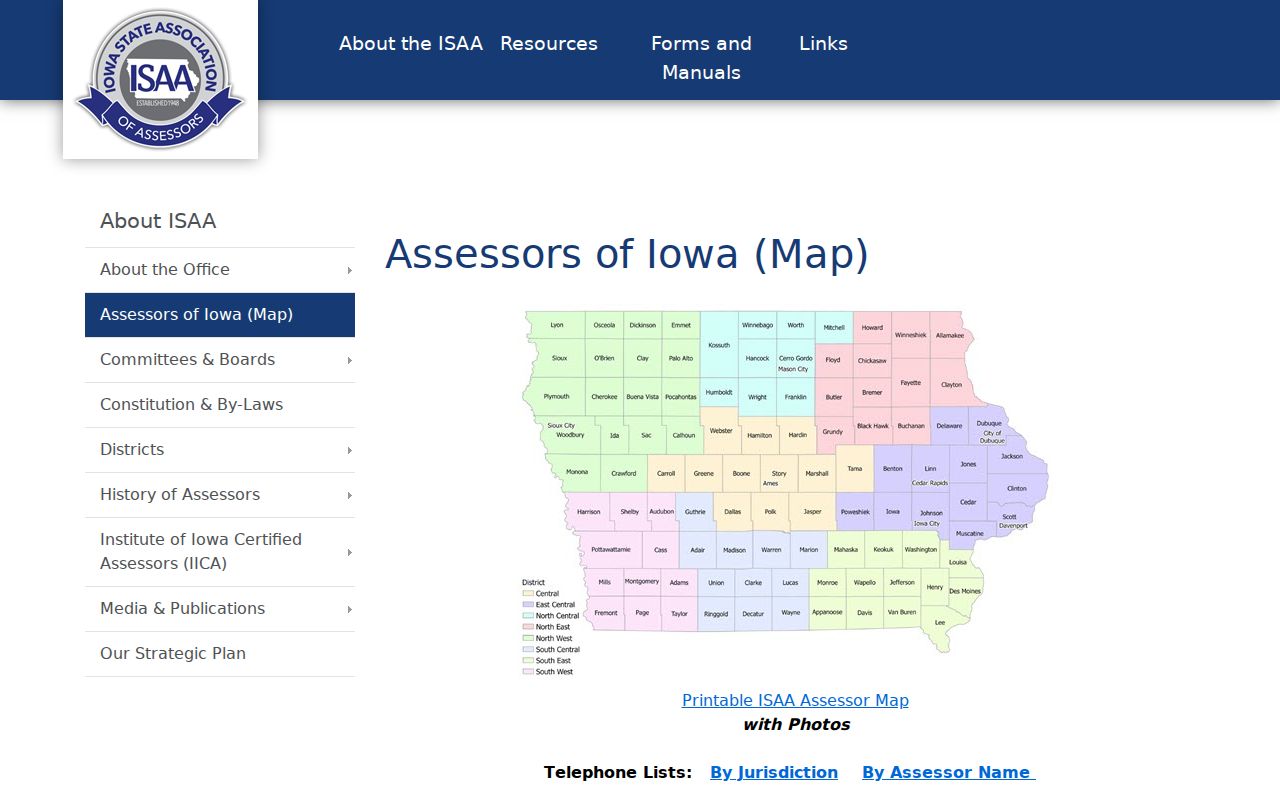
Once you know the city or county, use that assessor's own search and read its update note before relying on parcel fields.
Iowa Land Records Joins County Indexes
Iowa Land Records offers a statewide search across all 99 county recorder systems. Search options include county and document type, recorded-date range, party role, last name, first name, or a full company name. The result is an index lead. It may not include an image, and older local books or instruments that are not exposed online still require the county office. The portal's images-only setting can hide entries without a displayed image. A free account expands saved and advanced search tools, subject to daily document-view limits.
Search both grantor and grantee. A grantor transfers an interest; a grantee receives one. Keep the recorded date, document type, county, and legal description with the result. The image or certified copy comes from the appropriate custodian, and a deed entry alone does not prove who lives at the address now.
| Portal field | Type | Required? | What to note |
|---|---|---|---|
| County and document type | Selection / multi-select | Not stated in the research | Choose a local county and instrument type. |
| Recorded-date range | Start and end date | Optional filter | Month, day, and year fields narrow the index. |
| Grantor or grantee | Role selector | Optional filter | Search either party role. |
| Last name / first name or full company name | Text fields | Optional search fields | Company-name search can replace a personal name. |
| Images only / party result options | Checkboxes | Optional | These settings change which indexed results appear. |
The Iowa Land Records search screen shows the county, search, results, details, and saved tabs. This view helps explain why a statewide index can have several steps before a user reaches a document.
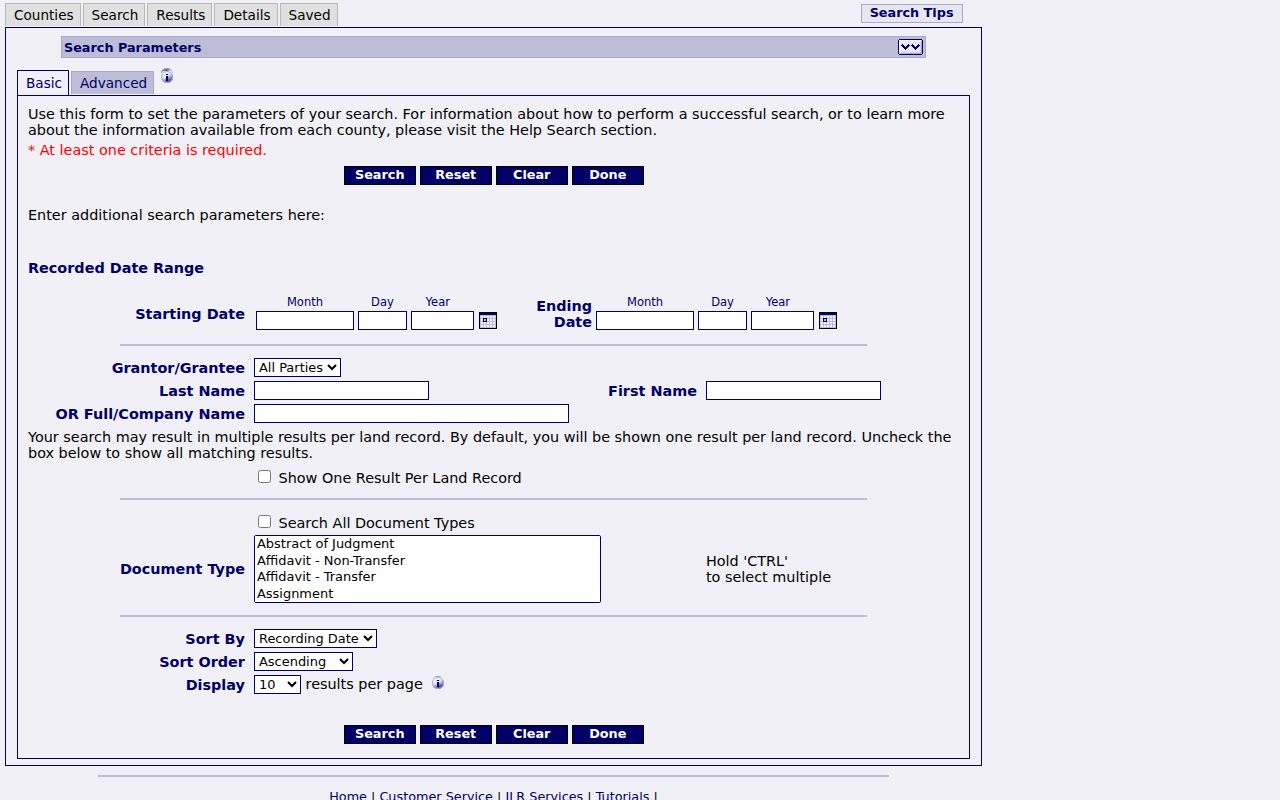
The tab sequence separates a name search from its result details; if an older deed is missing, ask the county recorder about its local index or microfilm.
Current Iowa Resident Record Sources
Modern Iowa sources show different relationships to people and places. They are not interchangeable, and none should be treated as a complete list of residents. The table separates an owner or case-party record from an individual check or a licensed professional entry.
| Source | Who It Lists | Keeper | Access |
|---|---|---|---|
| Local assessor | Parcel owners and property fields, as published locally | City or county assessor | Route through the Iowa assessor map; fields vary |
| SOS voter lookup | One person's registration and polling details | Iowa Secretary of State and county auditors | Individual self-check, not reverse lookup |
| Iowa Land Records | Parties named in recorded land instruments | County recorders | Free public index with account and image limits |
| Iowa Courts Online | Parties and events in public state trial dockets | Iowa Judicial Branch | Public docket; filed documents may require courthouse access |
| DIAL license search | People with a professional license in its board scope | Iowa DIAL boards | Board and privacy limits apply |
For a person, start with the source that matches the question, then check a second independent detail. A registered agent, licensee, deed party, or voter is not automatically a current resident. The Iowa resident lookup page explains that one-person verification path.
Iowa Voter Lookup Checks One Registration
The Iowa Secretary of State's public lookup is built for a person checking their own registration and polling place. It asks for first and last name, ZIP, house number, and birth month, day, and year. It is not a name-to-address directory. A public lookup should not be used as a way around that design.
| First and last name | Required identity fields |
|---|---|
| ZIP and house number | Required address inputs |
| Birth month, day, year | Required date inputs |
| Result purpose | Registration and polling information for an individual |
Bulk voter lists follow a separate order process. A request must identify a permitted political, official, or research use; commercial use is prohibited. The state and county versions have different jurisdiction, status, participation, format, and fee choices. The Iowa voter-list instructions explain those limits. Neither route should be described as a public residents directory.
Iowa Court Dockets Are Not Full Case Files
Iowa Courts Online offers a free public starting point for state trial-court case status and docket events. Name searches use first and last name, with optional middle-name and date-of-birth fields in the documented workflow. A case ID needs a county, case type, and the full 17-character uppercase identifier. Treat a name-only result as a possible match until a second detail agrees.
The docket is not the same as the file. Public case documents are generally viewed at a courthouse terminal in the county where the case was filed; sealed or restricted items are not open online. The separate Advanced Case Search costs $25 per month and adds docket detail, but it does not provide document access. Citation/payment searches can take 14 to 21 days to show a new citation, and city parking matters are not included.
Iowa Vital Records Follow Access Rules
Birth, death, marriage, and fetal-death records are not an unrestricted Iowa name index. The state registrar and county registrars share custody, and the event date and county help determine where to ask. HHS lists a current $20 search fee that includes a copy if found or a no-record letter. Online orders go through the authorized VitalChek route, which adds a provider fee. Mail requests require the form and supporting material, and a mailed signature may need notarization.
Eligibility is limited to specified close relatives, the person named, and authorized representatives with required proof. Under Iowa law, many birth, marriage, divorce, or annulment records open after 75 years; death and fetal-death records after 50 years, subject to custody and statute. Older genealogy searches use separate cutoffs: statewide births from July 1880, deaths from July 1904, and marriages from July 1916. Read the current Iowa HHS request instructions before sending a form or payment.
Request Iowa Records Under Chapter 22
Iowa Code chapter 22 gives a general right to inspect or copy public records unless an exception applies. A request can be made in person, in writing, by phone, or electronically; a person generally need not state a purpose or identify themselves. The office need not create a new record or answer a broad research question. Name the custodian, identify the existing record, and narrow the date range or series.
- State the county or agency, record type, and date range.
- Say whether you want to inspect the record or receive a copy, and whether electronic delivery works.
- Ask for a cost estimate if staff search or redaction may take time.
- If access is denied, ask which legal exception applies; contact IPIB for guidance.
Fees are based on actual direct and reasonable costs, not one statewide flat rate. IPIB says a request taking less than 30 minutes should generally have no charge beyond copying. There is no single fixed response deadline. Its chapter 22 guidance covers requests, fees, delay, and redaction.
The Iowa public-records guidance page sets out those request options. The display below shows the state guidance route; it does not replace an agency's own request process.
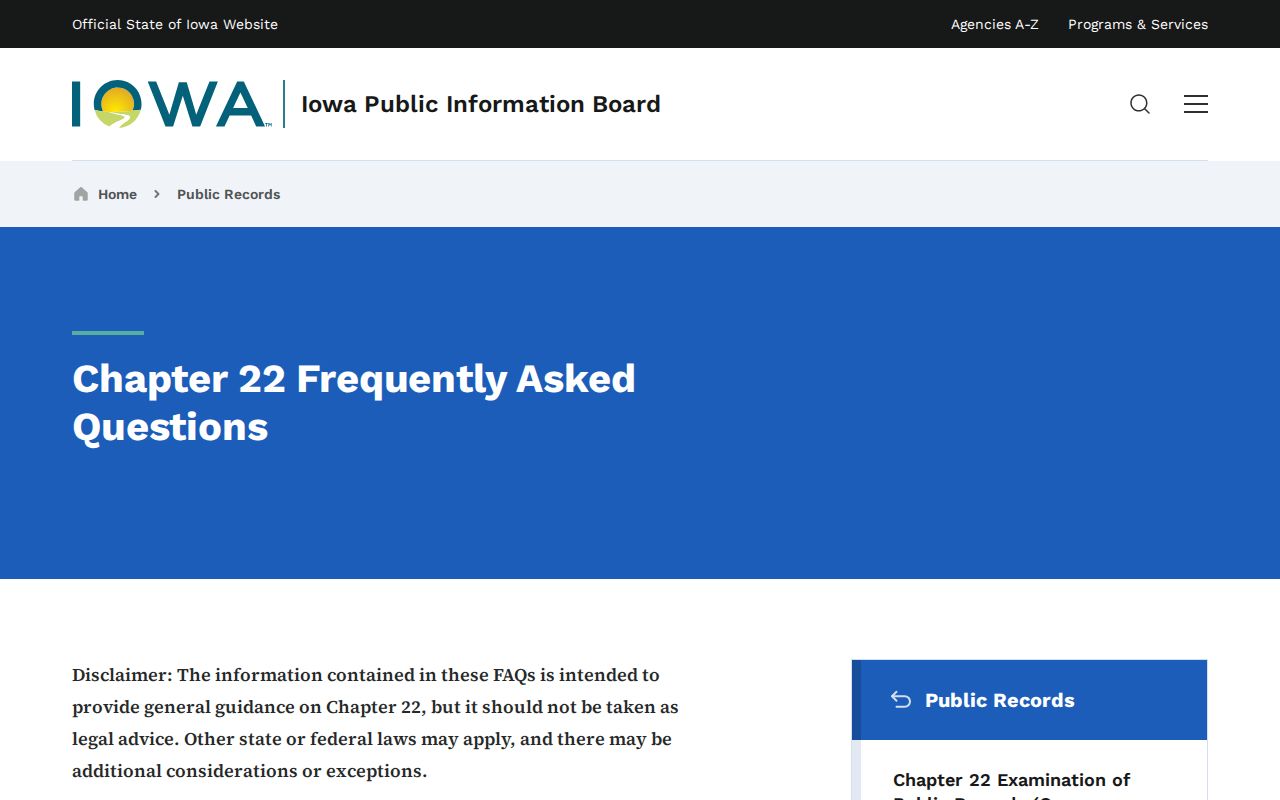
Send the actual request to the office holding the record, and do not ask a custodian to release protected identifiers or confidential addresses.
Iowa Historical Resident Directories
Iowa's historic directory trail is strongest in local collections. Des Moines volumes connect a printed name with an address, occupation, year, and often a street guide. The State Historical Society and county collections add census, land, probate, and court records that can check a directory lead. A city-directory entry does not prove continuous residence or ownership, and each city's surviving years differ. The Iowa city directory collections page covers the Des Moines runs and the ways to locate other Iowa volumes.
Polk County's archive has separate city, suburban, land-index, and lot-index runs. Those date ranges do not line up as one continuous list, so preserve the series name, publisher, year, volume, and page with each finding.
Iowa Census Years Bridge a Missing Gap
Iowa's state censuses help fill a major hole in the federal record. The 1890 federal census is largely missing across the country, while Iowa has state counts for 1885 and 1895, followed by 1905, 1915, and 1925. The federal count begins with Iowa as a territory in 1840, and early schedules may name only the head of a household. Use a directory year to locate a street, then compare the closest census, deed, or probate record rather than assuming the household stayed fixed.
The State Historical Society's county-record guides identify microfilm and original series by county. As of September 2026, the Society notes limited archive access during a storage move and asks researchers to contact staff five days in advance. Check the research-center access notice before planning an archive visit.
Iowa Address Records Have Privacy Limits
Public access does not mean every field can be shared. Iowa chapter 22 allows exceptions and redactions, courts may seal a case, and vital records have eligibility rules. Safe at Home provides qualifying survivors with a substitute address and confidential voter-registration path. Do not use another search to defeat that protection. The official Safe at Home program explains enrollment and mail forwarding; confidential participant details must not be republished.
Use public records for lawful personal research, family history, and civic questions. Do not use a search to stalk, harass, threaten, or harm someone.
Some Iowa license records also hide a person's date of birth, home address, phone, or email under Iowa Code §10A.508. A visible license or business filing shows a professional or company role, not a person's home. Search the official custodian and keep the result within its stated scope.
Iowa Search Results Show Different Roles
A deed party, registered agent, licensee, case party, and voter have different ties to a record. The Iowa Secretary of State business search can return entity status, type, filing history, prior names, and public agent or officer details, but a registered-agent address is a service address, not proof of residence. DIAL license search covers professional boards, while educator credentials use a separate route. A result should be read as the record type it is, not folded into a profile of a person.
For a company, search a legal name, former name, or business number and note the as-of date. For a license, check the board and license number with the issuing agency. The Iowa business-entity search and professional-license search are purpose-specific state tools, not general resident directories.
| Official Iowa records | Commercial compiled results |
|---|---|
| Name a custodian, record class, and date; the office controls the index, image, and any redaction. | Data may come from mixed sources and may be stale or hard to trace to a custodian. |
| Use the record for its stated purpose and verify a result with the holder. | Do not treat a compiled result as proof of identity or as an official record. |
Iowa County Indexes Keep Separate Date Runs
Des Moines property history shows why a statewide residents directory needs a county step. Polk County lists a land index from 1848 to May 1, 1952, a lot index from 1851 to July 24, 1959, and recorder online real-estate index records from 1992 forward. The county's city and suburban directories follow still other date ranges. Those collections answer different questions: a lot index ties a tract to a plat, a deed index names parties to an instrument, and a directory places names at an address in a publication year.
Other counties have their own record series and access gaps. Iowa County describes local records back to 1838, and Lee County reports a record room with images from 1836 to 1983. These are county examples, not statewide coverage promises. If an Iowa Land Records search stops short, the State Historical Society's county guide can point to the series or microfilm that fits the county and era.