
Finding Iowa Residents in Public Records
No master roll of Iowa residents exists. Start instead with the county and the question you are asking. An assessor record links an owner to a parcel. But it will not name everyone living there. Iowa Land Records can surface people named in a recorded instrument. A deed party is not always a resident. A voter lookup verifies one person's registration and polling details. An old library directory can show a past address. A court docket only names a party to a case. A good Iowa residents directory search is a short path through these sources. It is not proof from a single hit.
Names repeat often, so pair two independent details. A county, middle name, date, spouse, parcel number, or case number can separate people who share a name. Record the source and search date with every result. An empty result never proves a person was not there. The item may sit in a local office, fall outside a portal's years, or be restricted from view.
- Write down the known name, county, address, and year, keeping old spellings and initials.
- For a parcel or deed question, route to the local assessor and Iowa Land Records.
- Use the Secretary of State lookup only to check a person's own voter registration.
- For a past Iowa household, search a library directory and pair it with a census or land record.
- Ask the named custodian for a record that is not online; state the date range and record type.
- Public roll
- A list kept by an office for a defined job, such as election administration.
- Index
- A search aid that points to a record; it is not the full document.
- Parcel
- A mapped tract of land with an assessor identifier.
- Criss-cross directory
- A historical directory section arranged by street address rather than by name.
Iowa Offices Behind Resident Records
Iowa splits custody by record type. A statewide portal may help you find an index. But the county where the parcel, case, or event arose often holds the image or certified copy. County assessors each serve a city or county jurisdiction. A state map helps you pick the right office. For questions about public records themselves, the Iowa Public Information Board offers guidance under Iowa Code chapter 22. The record copy always comes from its custodian.
Iowa Land Records
Search the statewide recorder index, then contact the county recorder for local holdings or certified copies.
Iowa HHS Vital Records
The state registrar and county registrars handle vital records under separate access and age rules.
State Historical Society of Iowa
County record guides, microfilm, census material, and local-history collections support older searches.
Iowa Public Information Board
Plain-language guidance explains access, fees, delays, and exceptions under chapter 22.
The Iowa assessor jurisdiction map sends a parcel question to the right local office instead of a single statewide property card.
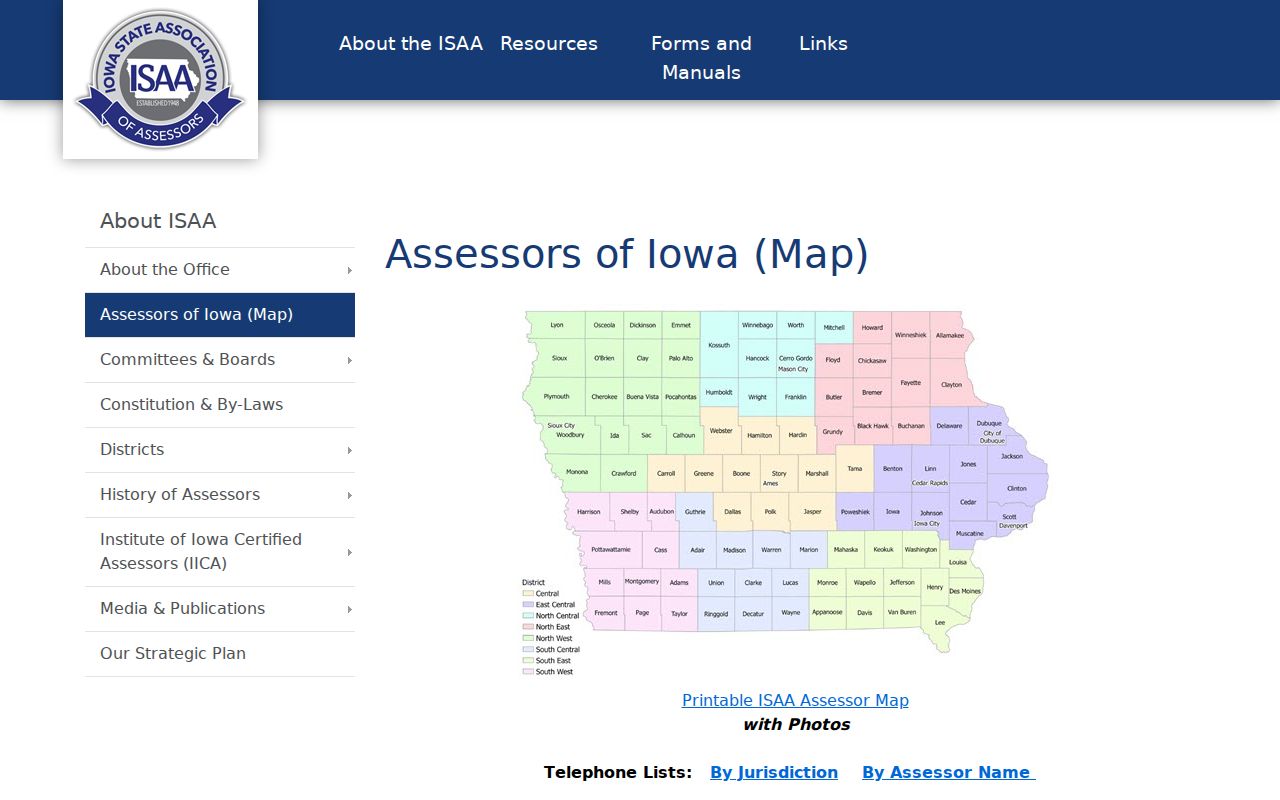
Once you know the city or county, use that assessor's own search. Read its update note before trusting any parcel field.
Iowa Land Records Joins County Indexes
Iowa Land Records searches all 99 county recorder systems at once. You can narrow by county, document type, recorded-date range, party role, last name, first name, or a full company name. What you get is an index lead. An image may not be attached. Older local books or instruments left off the portal still require a visit or call to the county office. The images-only setting can hide entries with no displayed image. A free account unlocks saved and advanced search tools, though daily document-view limits apply.
Search grantor and grantee separately. A grantor transfers an interest; a grantee receives one. Save the recorded date, document type, county, and legal description with each result. The custodian supplies the image or certified copy. A deed entry alone does not prove who lives at the address now.
| Portal field | Type | Required? | What to note |
|---|---|---|---|
| County and document type | Selection / multi-select | Not stated in the research | Choose a local county and instrument type. |
| Recorded-date range | Start and end date | Optional filter | Month, day, and year fields narrow the index. |
| Grantor or grantee | Role selector | Optional filter | Search either party role. |
| Last name / first name or full company name | Text fields | Optional search fields | Company-name search can replace a personal name. |
| Images only / party result options | Checkboxes | Optional | These settings change which indexed results appear. |
The Iowa Land Records search screen lays out county, search, results, details, and saved tabs. The tab order explains why a statewide index takes several steps before a document appears.
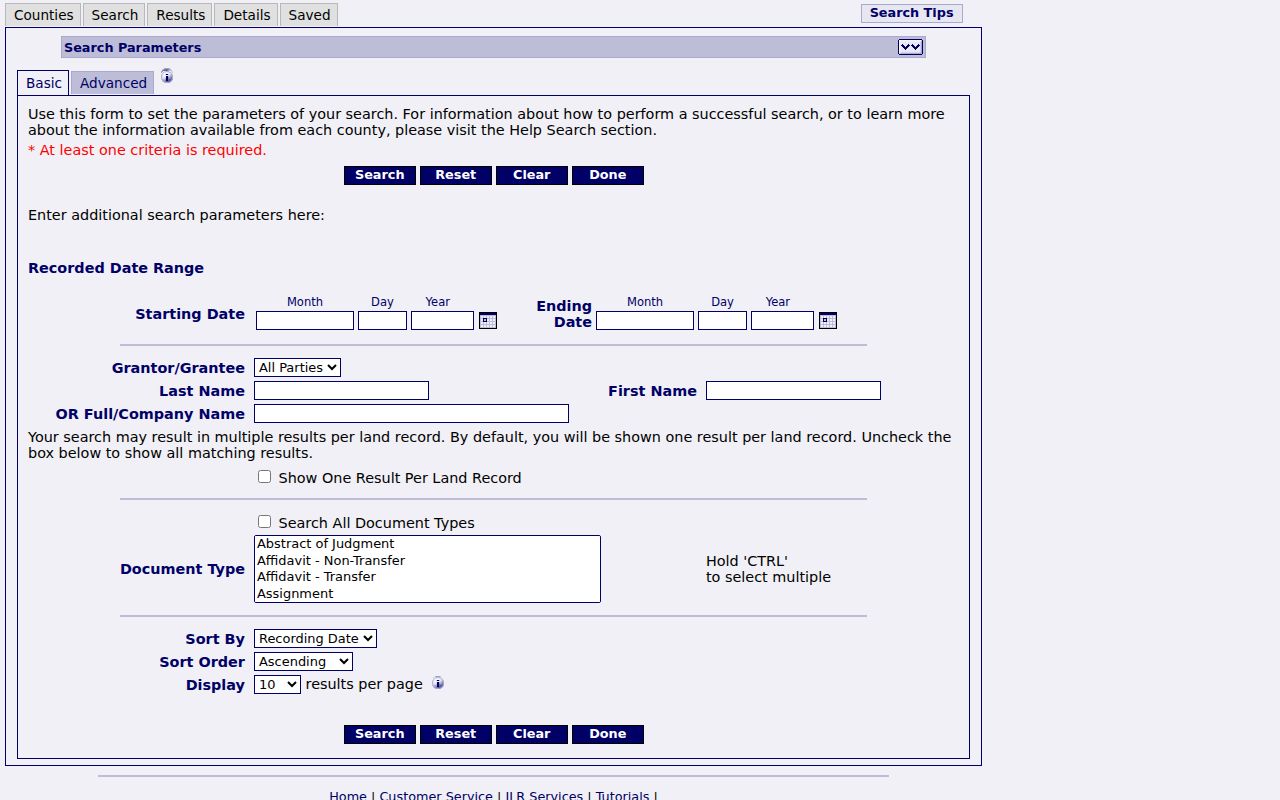
The tabs keep a name search apart from its result details. If an older deed is missing, ask the county recorder about its local index or microfilm.
Current Iowa Resident Record Sources
Modern Iowa sources relate to people and places in different ways. They are not interchangeable. None is a complete residents list. The table below separates an owner or case-party record from an individual check or a licensed professional entry.
| Source | Who It Lists | Keeper | Access |
|---|---|---|---|
| Local assessor | Parcel owners and property fields, as published locally | City or county assessor | Route through the Iowa assessor map; fields vary |
| SOS voter lookup | One person's registration and polling details | Iowa Secretary of State and county auditors | Individual self-check, not reverse lookup |
| Iowa Land Records | Parties named in recorded land instruments | County recorders | Free public index with account and image limits |
| Iowa Courts Online | Parties and events in public state trial dockets | Iowa Judicial Branch | Public docket; filed documents may require courthouse access |
| DIAL license search | People with a professional license in its board scope | Iowa DIAL boards | Board and privacy limits apply |
Match the source to the question first, then confirm with a second independent detail. A registered agent, licensee, deed party, or voter is not automatically a current resident. The Iowa resident lookup page walks through that one-person verification path.
Iowa Voter Lookup Checks One Registration
The Iowa Secretary of State's public lookup exists so a person can check their own registration and polling place. It asks for first and last name, ZIP, house number, and birth month, day, and year. It is not a name-to-address directory. Using it as a workaround bends that design.
| First and last name | Required identity fields |
|---|---|
| ZIP and house number | Required address inputs |
| Birth month, day, year | Required date inputs |
| Result purpose | Registration and polling information for an individual |
Bulk voter lists follow a separate order process. A request must state a permitted political, official, or research use, and commercial use is prohibited. State and county versions differ in jurisdiction, status, participation, format, and fees. The Iowa voter-list instructions spell out those limits. Neither route is a public residents directory.
Iowa Court Dockets Are Not Full Case Files
Iowa Courts Online is a free first stop for trial-court case status. A name search takes first and last name, with optional middle-name and date-of-birth fields. Case-ID lookups demand the county, the case type, and all 17 uppercase characters. Treat a name-only hit as tentative until a second detail lines up. The docket is not the case file itself. To read actual case documents, a visitor generally goes to a courthouse terminal in the filing county. Sealed or restricted items stay off the web. A separate Advanced Case Search adds docket detail for $25 per month. It still delivers no documents. New citations can take 14 to 21 days to appear in the citation-payment search. City parking matters are left out entirely.
Iowa Vital Records Follow Access Rules
Iowa keeps birth, death, marriage, and fetal-death records under firm access rules. These are not an open resident lookup. Custody is split between the state registrar and county registrars. The event date and county decide where to ask. HHS lists a $20 search fee. That fee covers one copy if a record is found, or a no-record letter. Online orders run through the authorized VitalChek route, which adds a provider fee. Mail requests need the form plus supporting material, and a mailed signature may require notarization.
Eligibility stays narrow. The person named, specified close relatives, and authorized representatives with proof may obtain records. After 75 years, many Iowa birth, marriage, divorce, and annulment records open to the public. Death and fetal-death records open after 50, subject to custody and statute. Genealogy researchers work from separate statewide cutoffs: births from July 1880, deaths from July 1904, and marriages from July 1916. Before sending any form or payment, read the current Iowa HHS request instructions.
Request Iowa Records Under Chapter 22
Iowa Code chapter 22 grants a general right to inspect or copy public records. The right applies unless an exception covers the record. A request can arrive in person, in writing, by phone, or electronically. No stated purpose is required. A requester generally need not even identify themselves. The office owes no new record, either, and will not answer a broad research question. Success comes from naming the custodian and identifying the existing record. It also helps to narrow the date range or series.
- State the county or agency, record type, and date range.
- Say whether you want to inspect the record or receive a copy, and whether electronic delivery works.
- Ask for a cost estimate if staff search or redaction may take time.
- If access is denied, ask which legal exception applies; contact IPIB for guidance.
Fees rest on actual, direct, and reasonable costs rather than one statewide flat rate. IPIB says a request under 30 minutes should generally cost nothing beyond copying. No single fixed response deadline exists. Its chapter 22 guidance walks through requests, fees, delay, and redaction. The Iowa public-records guidance page lays out each request option. That state guidance route explains the law itself. Each agency still runs its own request process.
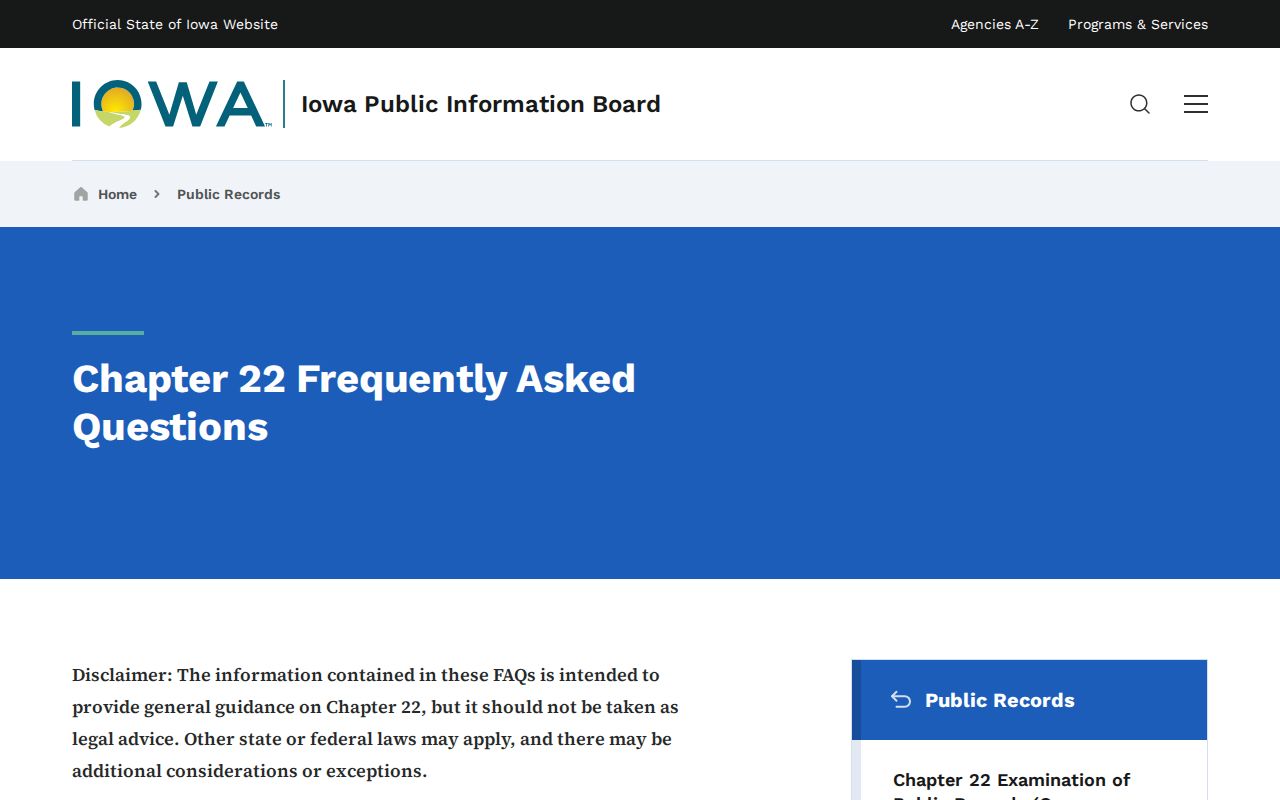
Send the actual request to the office holding the record. Never ask a custodian to release protected identifiers or confidential addresses.
Iowa Historical Resident Directories
Iowa's historic directory trail runs strongest through local collections. Des Moines volumes tie a printed name to an address and an occupation. They add a year, and often a street guide. The State Historical Society holds census, land, probate, and court records. County collections hold them too, and they can test a directory lead. A city-directory entry proves neither continuous residence nor ownership. Every city's surviving years differ. The Iowa city directory collections page covers the Des Moines runs and how to track down other Iowa volumes.
Polk County's archive holds separate city, suburban, land-index, and lot-index runs. Their date ranges do not join into one continuous list. Record the series name, publisher, year, volume, and page with every finding.
Iowa Census Years Bridge a Missing Gap
Iowa's state censuses patch a major hole in the federal record. The 1890 federal census is largely missing nationwide. Iowa answers with state counts for 1885 and 1895, then 1905, 1915, and 1925. The federal count picks up Iowa as a territory in 1840. The earliest schedules may name only a household head. A good method is to let a directory year locate the street. Then weigh the closest census, deed, or probate record instead of assuming the household never moved.
The State Historical Society's county-record guides list microfilm and original series county by county. The Society currently notes limited archive access during a storage move. It asks researchers to contact staff five days in advance, so check the research-center access notice before any visit.
Iowa Address Records Have Privacy Limits
Public access does not mean every field is shareable. Iowa chapter 22 permits exceptions and redactions. Courts may seal a case. Vital records carry eligibility rules. Safe at Home gives qualifying survivors a substitute address and a confidential voter-registration path. Never use another lookup to defeat that protection. The official Safe at Home program explains enrollment and mail forwarding. Confidential participant details must never be republished.
Use public records for lawful personal research, family history, and civic questions. Do not use a search to stalk, harass, threaten, or harm someone.
Some Iowa license records also shield a date of birth, home address, phone, or email under Iowa Code §10A.508. A visible license or business filing shows a professional or company role, not a person's home. Search the official custodian and keep each result within its stated scope.
Iowa Search Results Show Different Roles
A deed party connects to a record one way. A registered agent, a licensee, and a voter each connect differently. That distinction matters. The Iowa business-entity search returns status, entity type, filing history, prior names, and public agent or officer details. Yet a registered-agent address is only a service address. Treat it as a mailing point, not proof anyone lives there. The professional-license search from DIAL covers board licenses, and educator credentials run through a separate route. Each tool answers one question well.
So read every result as the record type it is. Do not fold a business filing or a license entry into a profile of a person. For companies, search by legal name, former name, or business number. Then note the as-of date. For licenses, match the board and license number with the issuing agency. These are purpose-specific state tools rather than general residents directory lookups.
| Official Iowa records | Commercial compiled results |
|---|---|
| Name a custodian, record class, and date; the office controls the index, image, and any redaction. | Data may come from mixed sources and may be stale or hard to trace to a custodian. |
| Use the record for its stated purpose and verify a result with the holder. | Do not treat a compiled result as proof of identity or as an official record. |
Iowa County Indexes Keep Separate Date Runs
Des Moines property history shows why a statewide residents directory needs a county step. Polk County keeps its indexes in separate date runs. A land index covers 1848 through May 1, 1952. A lot index spans 1851 to July 24, 1959. Recorder real-estate records online begin in 1992. The county's city and suburban directories follow still other ranges. One search will rarely cover every era.
Each series answers a different question, too. A lot index ties a tract to its plat. A deed index names the parties to an instrument. A city directory places names at an address in a given publication year. That makes it closest to a true residents directory record.
Other counties keep their own series with their own gaps. Iowa County describes local records back to 1838. Lee County reports a record room holding images from 1836 to 1983. Treat these as county examples, not promises of statewide coverage. An Iowa Land Records search may stop short. The State Historical Society's county guide can then point to the series or microfilm that fits the county and era.